

The Youth Lab
Are You Chinamaxxing?
A new era of cultural influence is emerging, but not without complexity
In this week’s 52INSIGHTS, we explore "Chinamaxxing", a way Gen Z is building identity across cultures. As debates around appropriation emerge, it reflects a generation rethinking identity beyond borders and traditional boundaries, and global influence decentralising.
What is “Chinamaxxing”?
"Chinamaxxing" is a viral Gen Z trend where people, often outside of China (and sometimes outside of Chinese heritage), adopt elements of Chinese lifestyle and culture.
From drinking hot water and practising tai chi or gua sha, to engaging with Traditional Chinese Medicine (TCM), wellness habits, food and daily rituals. At its simplest, it’s about adopting Chinese ways of living. But it signals something much bigger.
Recent reporting highlights how the trend can feel jarring, particularly when deeply rooted practices are reduced to aesthetic content without context.
But it’s also being driven by genuine curiosity and shifting global influence.
Beyond the Surface: When Culture Becomes Content
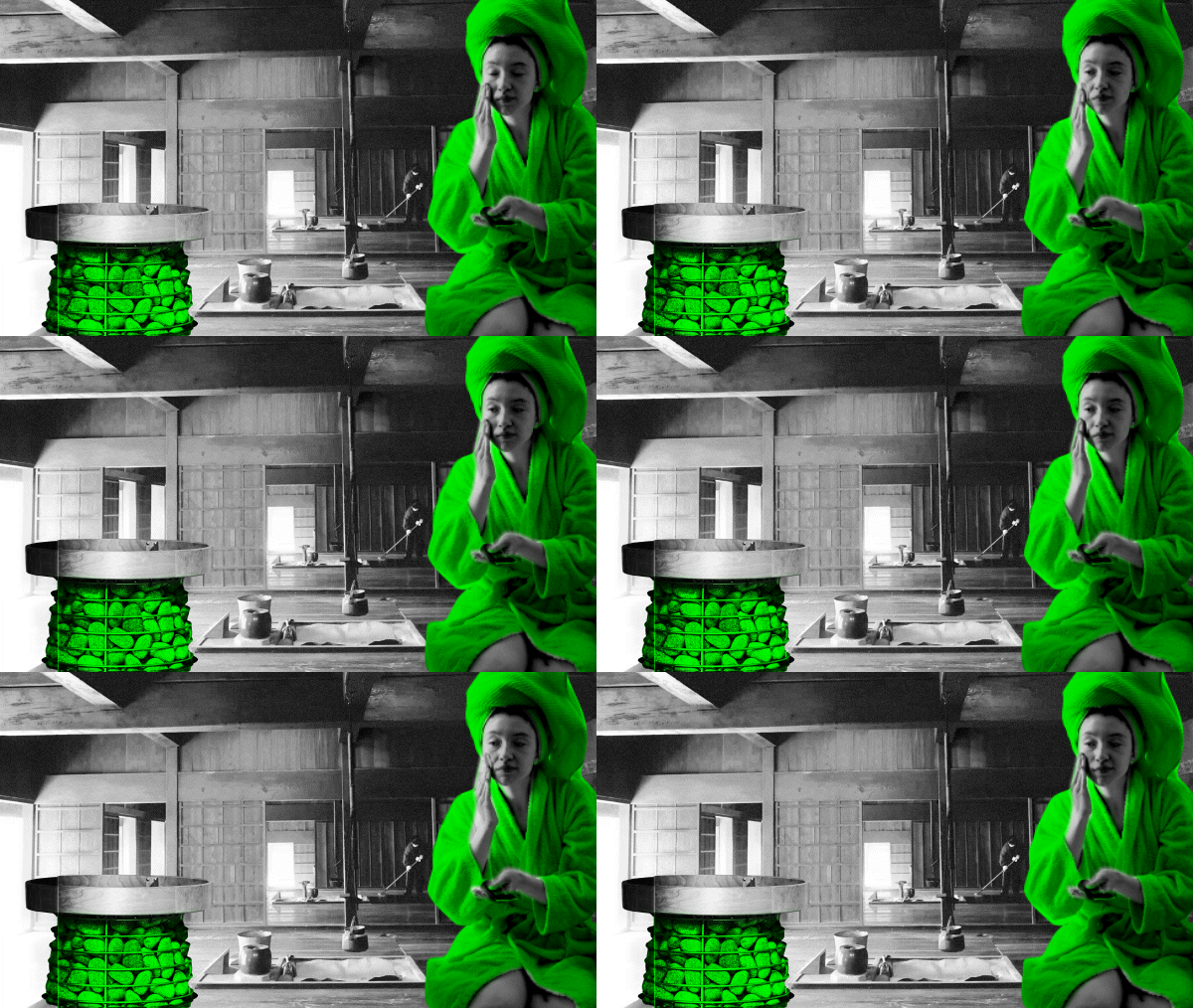
Culture is no longer just experienced from travel and in-person connections, it circulates across the globe on social media. From TCM to K-beauty routines, Finnish sauna rituals and Japanese design principles, distinct national cultures are influencing global trends.
As these practices move from lived experience to viral content, the line between appreciation and appropriation is harder to define, and easier to cross. Platforms like TikTok have collapsed cultural distance from plane journeys to a scroll.
Culture as Content: Why it’s happening
This shift is being driven by a generation reacting to their own lives. Many young people are burnt out from hustle culture, disillusioned with Western systems and are searching for a better way of doing things, balance and meaning. 73% of Gen Z say they are actively trying to improve their mental health, and looking towards Eastern wellness like TCM is resonating.
At the same time, platforms like TikTok have opened up everyday Chinese life in ways traditional media never did. For many, it’s the first time seeing China as modern, relatable and aspirational.
Is it just cultural appropriation?
There are real issues around cultural flattening, loss of nuance and surface-level adoption. The idea of giving "praise to the adopter, not the originator" comes to mind.
“What a privilege it is, to be able to try on someone else’s identity for a day without inheriting any of the consequences.”
Faith Xue, the editor-in-chief of Coveteur.
But it’s also:
- Increasing cultural visibility, there's a meaningful shift in global perception
- Reflecting genuine curiosity, it's less about “taking”, more about trying to understand (even imperfectly)
- Signalling a shift in cultural power, China is becoming a powerhouse of cultural influence, not just an economic one
Dr Felice Chan, an acupuncturist, doctor of Chinese medicine and co-founder of the skincare brand Moonbow, said that she loves the visibility around TCM:
“If it gives acupuncturists jobs, if it gives light to other Chinese medicine brands, why not?”
Alex, 23yrs old, from The Love Network shares a perspective of why young people like her are adopting these influences from outside of their culture:
“I don’t see it as taking from another culture, I see it as learning from it. If something makes me feel better or more grounded, I want to make it part of my life.”
It’s not just about China
"Chinamaxxing" is the headline, but the behaviour is global. Young people in the West are looking beyond their immediate proximity for inspiration, pulling from multiple cultures to build new ways of living and expressing identity.
- Korean culture: systemised self-improvement
K-beauty didn’t just export products - it exported a mindset, multi-step routines, skincare as an investment, a discipline and a hobby - Japanese culture: intentional living
From wabi-sabi to kintsugi, Japanese aesthetics have become a desirable aesthetic trend. All about simplicity, functionality and the beauty of imperfection - Finnish culture: soft living
Wellness routines around sauna culture, outdoor living, connection with nature, bringing aspirational calm into busy lives
What connects them
This isn’t trend-hopping, it’s identity-building. Young people are:
- Questioning traditional norms
- Rejecting one-size-fits-all lifestyles
- Curating culture like a moodboard
Chinamaxxing isn’t just about China, it’s a signal of a generation building identity from everywhere, even if they don’t always get it right. With this in mind, culture can be more readily understood by younger generations as something they can compose and curate, not just belong to and engage in.
Why this matters for brands
- Cultural literacy is now visible: “Audiences can tell instantly if you’re informed.”
- Global doesn’t mean generic: “Borrowing aesthetics isn’t enough for credibility.”
- Culture is defended in real time: “Misrepresentation will be called out quickly.”
Brands have already learned this lesson the hard way. From Adidas Oaxaca to Prada’s Kolhapuri sandal controversy to Kim Kardashian’s misfired launch of what we now know as SKIMS, cultural missteps are no longer niche, they’re global stories. The issue is when culture is used without context, credit or collaboration, it quickly shifts from appreciation to appropriation.
BRAND TAKEOUTS
- Move beyond the aesthetic, focus on meaning, not just visuals
- Show your working, transparency builds trust
- Build with, not from, collaborate with cultural voices
- Turn consumption into education, add context, not just content
“In a world where culture is endlessly remixable, respect is what matters. The brands that win won’t be the fastest to adopt global trends, they’ll be the most credible in how they engage with them.”
- Director of PR & Advocacy at THINKHOUSE, Donna Parsons