

The Youth Lab
Brand Collabs Without Compromise: Inside the Palace Playbook
Brand collaborations have been having their moment for years. At this point, they’re less a trend and more a working method. Fashion borrows from sport. Luxury takes cues from the street. Cultural institutions lean into product. Product leans into content. The best partnerships don’t just broaden reach. They broaden meaning. They create a new context for both sides.
When collaboration works, it’s felt rather than explained. It doesn’t read like a logo swap or a campaign doing the heavy lifting. It feels like a shared point of view, a cultural pulse people want to participate in, not just observe. This instinct isn’t new. It mirrors how youth culture has always operated. Scenes overlap. References get remixed. Taste is collective. Ideas pass between people, places and platforms until they form a shared visual language. In this edition of 52INSIGHTS, we explore how a London skate label has grown into a global cultural reference point.
Where it all started…
Founded in London in 2009 by Lev Tanju and Gareth Skewis, Palace Skateboards wasn’t cooked up as a fashion brand. It came out of the Palace Wayward Boys Choir. A loose crew of mates skating London and filming lo-fi skate edits shot with dry humour and a genuine affection for the city. Those early videos weren’t polished. They were raw, chaotic and funny. It wasn’t trying to “represent” skate culture. It just was skate culture, as they were living it.
The clothes showed up later. But when they did, they carried all of that energy with them, same tone, same attitude and the same slightly unhinged charm. From early on, Palace didn’t feel like a “brand.” It felt like something bigger.
“I first clocked it around 2012/13. I remember picking up a Palace Surf Co. tee from Slam City Skates. The graphic took over the whole back. Big, bold, and absolutely unapologetic. I wasn’t a skater, far from it. I tried, I failed, but I was drawn to the feeling around it.”
Andy Forshaw - Creative Director - THINKHOUSE
That’s the gravity skate culture carries. Palace harnessed that without gatekeeping it, inviting everyone in. They flipped luxury iconography, but it wasn’t parody. It was confidence. Grainy VHS edits dropping in a polished HD world. Captions that sounded like actual people, not brand managers.
On paper, it shouldn’t have lined up. In reality, that’s why it worked.
Collaboration as Curiosity, not Strategy
Reading interviews with Tanju, it’s clear Palace never treated collaboration as a growth lever.
“It excites me working with another’s DNA… It’s an opportunity to get into someone’s archive and put your own spin on it.”
And more bluntly: “Everything we put out is just stuff we want to do. If you don’t like it, lump it.”
adidas Originals. The Legitimacy Unlock
When Palace linked up with adidas in 2014, it didn’t feel like a young brand cashing in. It felt inevitable. adidas brought terrace heritage, European sport and global scale. Palace brought London skate energy and graphic irreverence.
The result wasn’t polite co-branding. It was tracksuits, bucket hats and Euro-sport nostalgia filtered through Palace humour. It sold out instantly. More importantly, it proved Palace could scale without sanding off its edges.
Juventus. Culture Crossing the Pitch
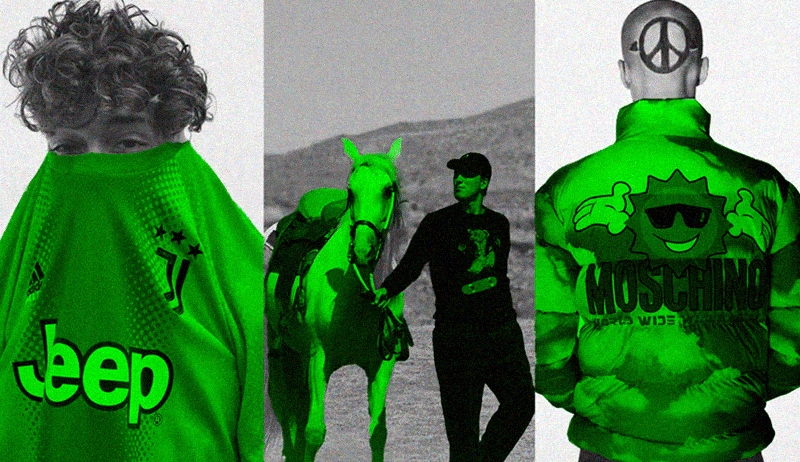
The Juventus collaboration landed at a pivotal moment. Football and fashion were already circling each other. PSG and Jordan had just dropped and two worlds were clearly on a collision course. Juventus had just rebranded. The sport was becoming more logo driven, more design conscious, more aware of how it looked beyond the pitch.
Palace entered that space not as a fashion brand borrowing football credibility, but as a skate brand rewriting how a kit could feel.
Gucci. Irreverence meets heritage
On paper, Palace and Gucci shouldn’t coexist. Gucci is Gucci, a fashion house built on heritage Italian opulence. But the Gucci monogram wasn’t treated with reverence. It was recontextualised, placed alongside Tri-Ferg logos without apology.
Palace didn’t elevate itself to meet Gucci. Gucci stepped into Palace’s tone. The way brands worked together was changing, and Palace were rewriting the book.
Stella Artois. World-building, not placement
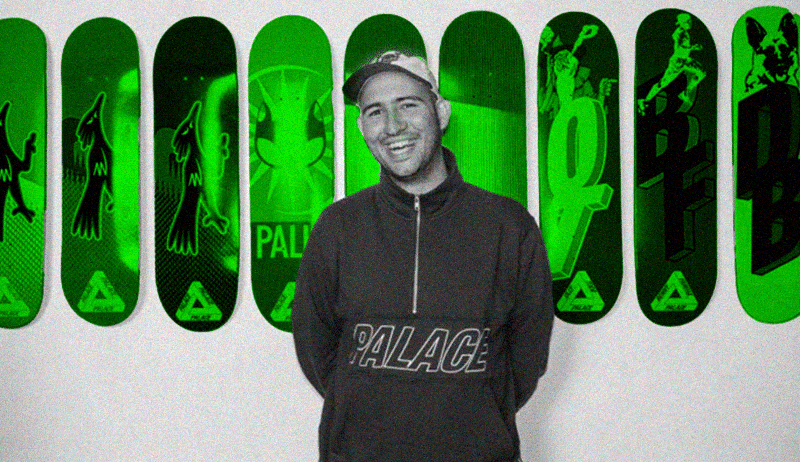
The Stella Artois collaboration worked because it never announced itself as one. Palace didn’t launch a campaign. They staged a scene. A pub built into the Soho store. A tongue in cheek film. Skateboarders drinking from co branded glassware like it was the most normal thing in the world.
Stella wasn’t foregrounded or over explained. It simply existed inside the Palace universe. The clothes, the film, the space all spoke the same language.
It’s a reminder that the strongest collaborations don’t chase attention. They build a world and let people step into it.
Nike. Infrastructure over hype
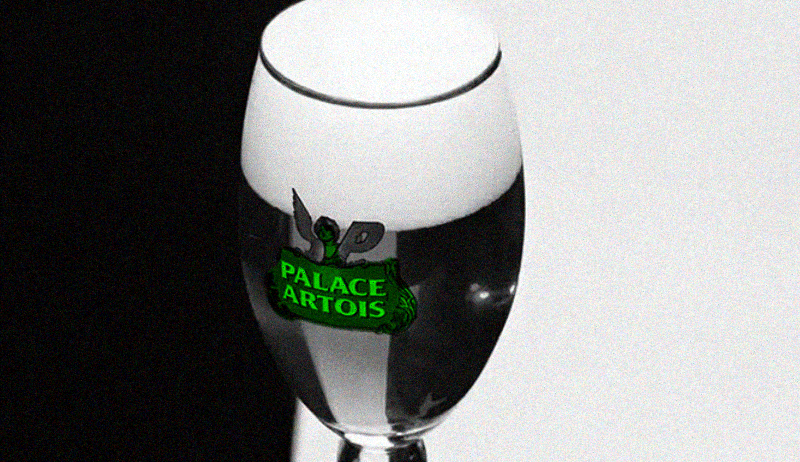
The Nike Manor Place project took that logic further. Instead of focusing solely on product, it helped create a permanent infrastructure - a converted bathhouse turned into a community space, a short walk from where Palace first took shape. Skatepark upstairs. Football cage below. Free to use. No bookings. No velvet rope. Just people turning up and using it.
The capsule followed the same logic. The Palace X Nike collection didn’t feel bolted on or designed for show. It tapped directly into Nike’s football heritage, pulling clear references from the Total 90 era. Not nostalgia for nostalgia’s sake, but something recognisable. Familiar silhouettes, graphics and attitudes that football fans instinctively understood.
That same ease carried through the launch itself. Wayne Rooney, Reece James, Leah Williamson and Giggs all featured alongside the Palace skate crew. Different worlds overlapping naturally, in true Palace form.
Nike’s role here went well beyond co-branding a capsule. They helped make something physical and permanent. A space that would still be there once the product had sold out and the campaign posts had disappeared.
It doesn’t feel like a pop-up or a moment engineered for attention. It feels like something built with the long view in mind. And in many ways, it feels like the logical outcome of how Palace has always approached collaboration, rooted, and far more interested in culture than noise.
Beyond the collabs
The most revealing parts of Palace aren’t always the headline collaborations. They’re the systems underneath them.
There’s the Friday drops, literally the same time, every week. No drama, no over-explaining. Just product landing like clockwork. People genuinely plan around it. It’s less a launch and more a rhythm.
And then there’s the product descriptions.
If you want proof Palace isn’t just orbiting culture but actually inside it, read those. Since the early 2010s, Lev Tanju’s written every one himself. They don’t read like e-comm copy. More like something overheard in a pub, half satire, half stream-of-consciousness.
One minute, it’s life advice. Next, it’s some sideways political observation. Sometimes it barely mentions the clothes.
In fact, back in 2022, they were pulled together into a hardback by Phaidon. It doesn’t feel like a catalogue. It feels like an artefact from a skate company that happens to make clothes.
So, back to Youth Culture
Youth culture has always run on remixing. Borrowing. Flipping references. Turning in-jokes into full-blown aesthetics. Palace didn’t study that dynamic, they actually grew up inside it.
That’s why their collaborations never feel like brands parachuting into culture. It feels like culture pulling brands into its world, on its terms.
That’s the Palace playbook.
That’s brand collaborations without compromise.
BRAND TAKEOUTS - WHAT CAN WE LEARN FROM THE PALACE PLAYBOOK
What began as a London skate label has grown into a global cultural reference point. Not just influencing fashion, but shifting how brands think about youth culture, where skateboarding, streetwear and style blur into one shared language. From high-fashion collaborations to shaping street style in cities like Tokyo and New York, Palace’s impact stretches far beyond clothes or skate decks.
Start With Identity, Not Opportunity
Collaboration should amplify who you are, not compensate for who you aren’t. If the core culture isn’t clear, partnerships will feel forced.
Protect the Culture at the Core
Scale should clarify identity, not dilute it. The more Palace grows, the more visibly skate it remains. That consistency and authenticity helps ensure brand collaborations land with the core fanbase.
Build Coherence, Not Noise
Attention is easy to buy. Cultural resonance is harder to earn. The collaborations with Stella Artois and Nike met customers where they are, showcasing that subtle integration can outperform spectacle, especially when it provides a space for your community to thrive.
What Palace has always demonstrated is that collaboration works best when brands stop trying to enter culture and start listening to it. With the right creative partners, it’s possible to identify where communities already live and activate around them with care, clarity and intent. When that happens, collaboration stops feeling like a tactic, less transactional and starts feeling like participation.
See also
Why Third Spaces Matter More Than Ever
In a world of perpetual doom-scrolling, people have never felt more disconnected. Social media promised us connection, yet loneliness is now widely recognised as a...