

The Youth Lab
Youth Culture Uncovered, Influence Redefined in the Creator Economy - Part 2
This week’s 52INSIGHTS is a part 2 download of our Youth Culture Uncovered 2025 event, unpacking the creator economy - its growth and significance, how creators are disrupting media, the brand impact of creator marketing, and how brands can move beyond seeing creators as “distribution channels” to embracing them as long-term partners for brand and business growth.
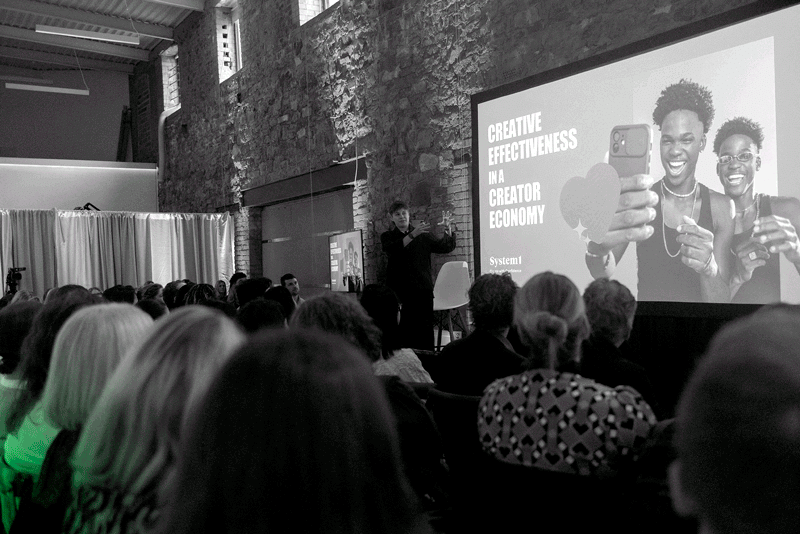
THE CREATOR ECONOMY: A SUPER TOUCHPOINT
Brands, businesses, institutions and governments are waking up to the power of creators. From TikTok to Twitch, YouTube to Instagram, the platforms may differ, but the principle is the same: individuals are the new media channels, commanding audiences built on authenticity, trust, and shared identity. For young people, creators are not only entertainers, they are teachers, tastemakers, and truth-tellers. For brands, they can make or break your profit margin, and for political parrties - they’re increasingly the ticket to election…
The creator economy is currently valued at €185 billion and is set to double by 2027. In 2025, for the first time ever, more global marketing spend flowed into the creator economy - content-driven platforms and creators - than into traditional media such as studios and production houses, according to WPP data.
When done well, Creators are what global marketing research and effectiveness company System-1 refer to as a ‘Super Touchpoint’ - they manage to create immediate and lasting effects. In fact, newly released Effectiveness Data from the IPA and System1 shows that creators have the highest long term return on investment versus any other marketing channel (including TV). They are also the number one driver of future brand demand (brand trust, affinity and awareness) when compared against all other marketing touchpoints.
System 1 data also highlighted the importance of distinctive entertaining assets - for brands working with creators, the smart integration of ownable brand assets (like spoken brand name, logo in context, sonic asset, fluent character, brand music), drive increased attention and brand recognition - optimising brand investment.
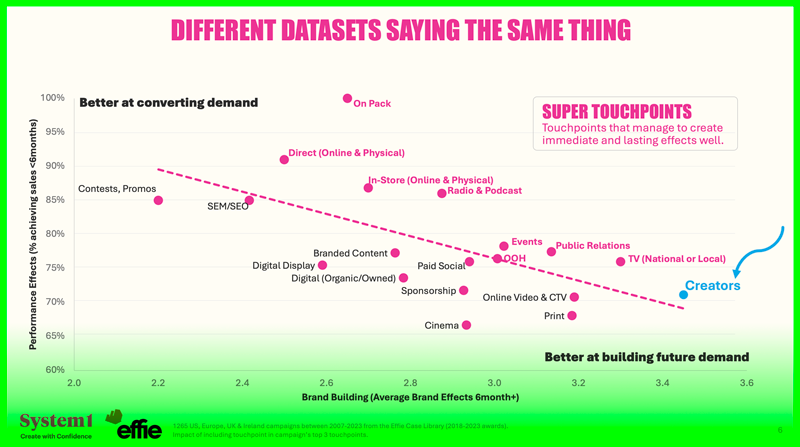
Source: System 1
LESSONS FROM CREATORS SHAPING MEDIA CULTURE
As a result of evolving content creator culture and the fast diversification of the media landscape (just think of the array of podcasters, YouTubers, and TikTokers you might come across on one scroll), young people are favoring content that shares news and information in forms that are more digestible, highly entertaining and extremely personable. Our Youth Culture Uncovered panel explored key lessons for influencing youth audiences based on the success of the content creator industry:
Key Lessons From Creators:
1. Invest in long term partnerships and strategies over short term bursts for more impact, trust and influence
“One-off collabs that serve as a quick tick-box exercise for fleeting awareness just don’t cut it anymore. The real impact happens when brands and creators commit to building something bigger together. Creators aren't just influencers, they're brand builders. Long term creator partnerships allow for authenticity to grow over time, deeper storytelling and shared growth. Brands should move towards strategic ambassadors, not just #ad collabs and creators should think about long term brand partners, not just sponsored posts. It’s a win-win when it’s long-term.”
Lucy Carroll Director of PR and Creator Partnerships | THINKHOUSE
2. Trust creators to bring a brand's brief to life in a way that resonates with their audience - they know their channel and what works and what doesn’t. It might feel uncomfortable at first to release some control, but creative freedom pays off in dividends when it comes to cut-through.
“Too many times I've received briefs that are 10 to 15 pages long, full of irrelevant information. If you're making a piece of brand content, you can only really aim to get across three or four max key messages, so keep the brief well written and to the point.”
James Kavanagh | Content Creator
3. Do your research: Is the creator the right fit for the brand, are there any conflicts there? Does their TOV and content style lend itself to landing your key messages? Similarly for creators, do you align with this brand's values, are you a fan? Is it a partnership that can come to life in an authentic way for both parties without any risk to audience trust?
“What makes the brand collaboration feel right? When the brand partner has seen the style of videos that I do, they just let me do exactly what I do.”
Cassie Stokes | Content Creator
|
|