

The Youth Lab
David vs the Goliaths - How a small indie shocked a billion-dollar industry
The Game Awards is an annual awards ceremony that highlights and celebrates the best of what the gaming industry has achieved within the past year. In 2025, a small studio by the name of Sandfall Interactive swept a majority of the awards and shocked the world with their masterpiece.
Sandfall’s success is one that accidentally challenged how the modern games industry thinks success is built. Clair Obscur: Expedition 33 took six years to develop. It came from a 30 to 50-person French studio, not a AAA publisher with a thousand-employee payroll. It strutted away with ‘Game of the Year’ alongside eight other awards, such as ‘Best Narrative’, ‘Best Score and Music’, and ‘Best Debut Indie Game’, setting a record for the most awards won at the Game Awards.
In this edition of 52INSIGHTS, we explore how Sandfall Interactive outdid its billion-dollar competitors, why creative freedom became Sandfall’s biggest advantage, and what brands can learn from the David vs Goliath story.
Building with Less, For More
In the games industry, AAA games are the Hollywood-style big-budget projects that take between a few years and close to a decade to produce; examples of their blockbuster games include Call of Duty or EA Sports FC (formerly known as FIFA). AAA games regularly carry budgets between $200 million and $300 million. Some go far beyond. Ubisoft’s ‘Skull & Bones’ reportedly ballooned into the $650 to $850 million range after more than a decade in ‘development hell’. Sony’s Concord is estimated to be between $100 and $200 million.
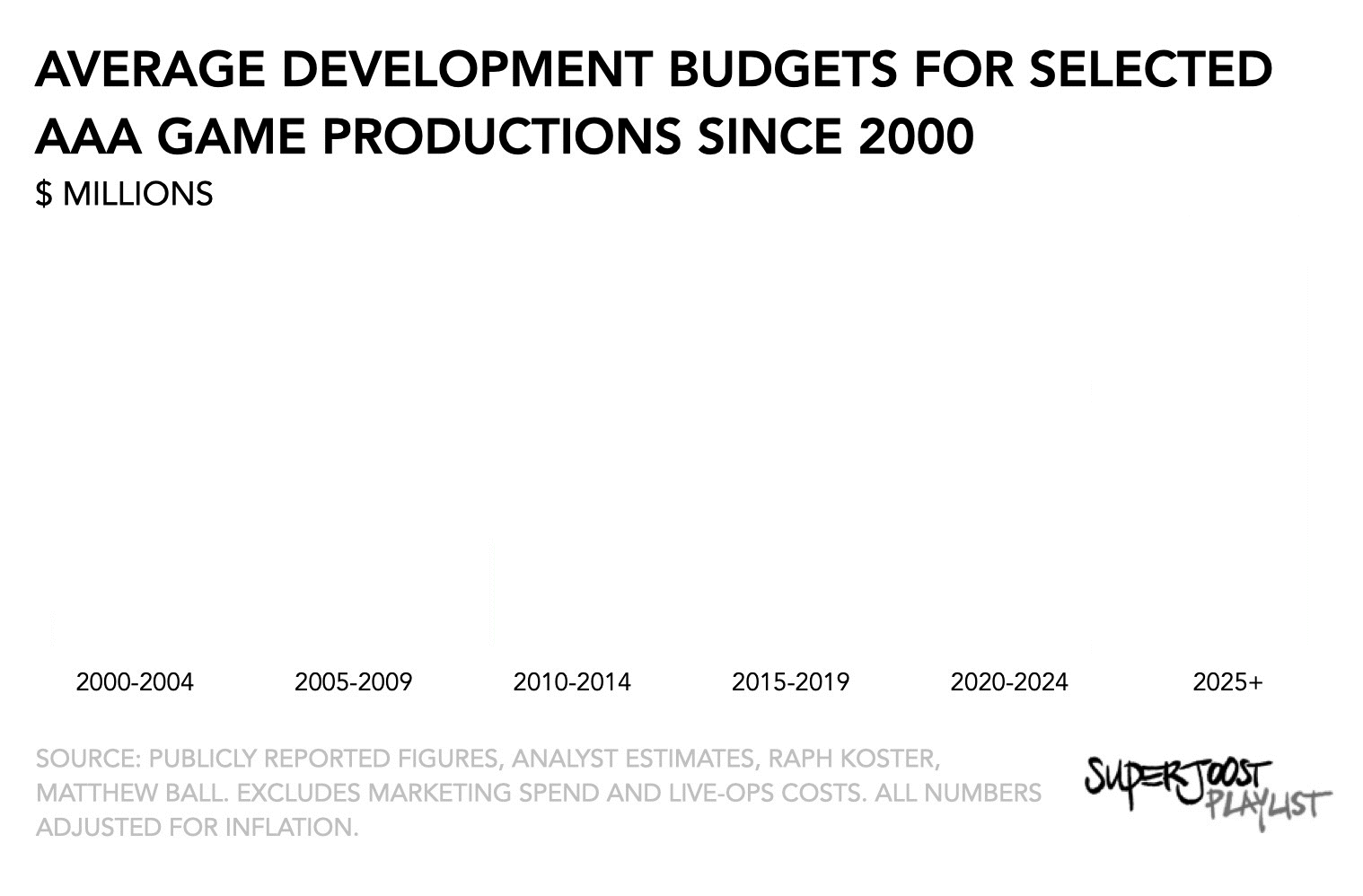
Expedition 33, on the other hand, cost around $10 million. Working on this project under its constraints, Sandfall scoped for a more linear approach in its overall direction and gameplay, emphasising the characters, story, music, art style, and gameplay mechanics to make up for the budgetary constraints.
Sandfall founder Guillaume Broche was a former Ubisoft developer before founding Sandfall Interactive. He knew this game would take a long time to be approved for production under Ubisoft. Desiring creative freedom, he left Ubisoft and went about building a unique team of creatives.
The lead writer, Jennifer Svedberg-Yen, was hired through Reddit after applying to voice act for a demo during lockdown. She did so well with ideas for the game that she was promoted to Lead Writer. She had never professionally written a game before.
The composer, Lorien Testard, was discovered in an obscure music chatroom where he had re-composed video game music into his style. He had no industry credits, yet his music is a highlight of the game.
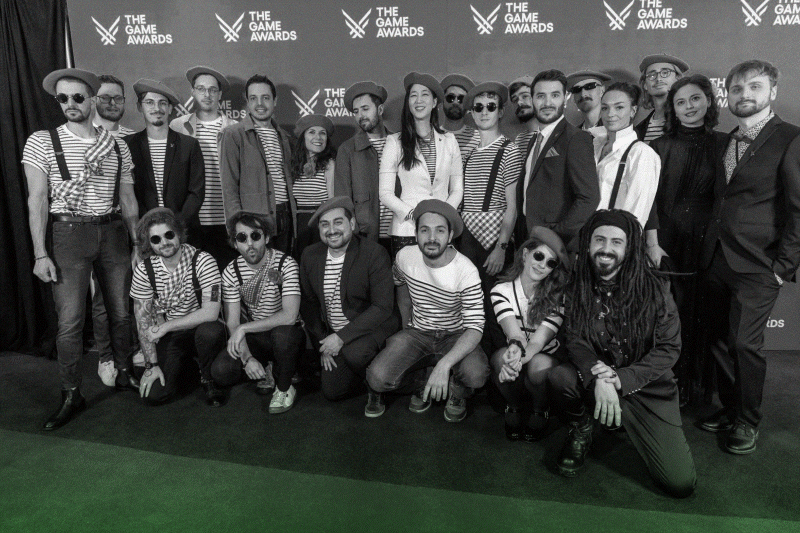
The majority of the team were juniors or newcomers learning Unreal Engine 5 on YouTube as they went. In an industry obsessed with poaching senior talent from competitors, Sandfall hired new blood with a fresh outlook on video game development.
Character battle animations were outsourced to Korean freelancers, big-name voice actors were hired and funded separately by publisher Kepler Interactive, allowing the core development budget to stay lean.
“It’s amazing what one small studio, given time and creative freedom, could achieve. The game has an emotional hook I did not expect going into playing it and I have been enamoured ever since.”
Mark Luna, Digital Motion Creator, THINKHOUSE
Re-Inventing The Wheel
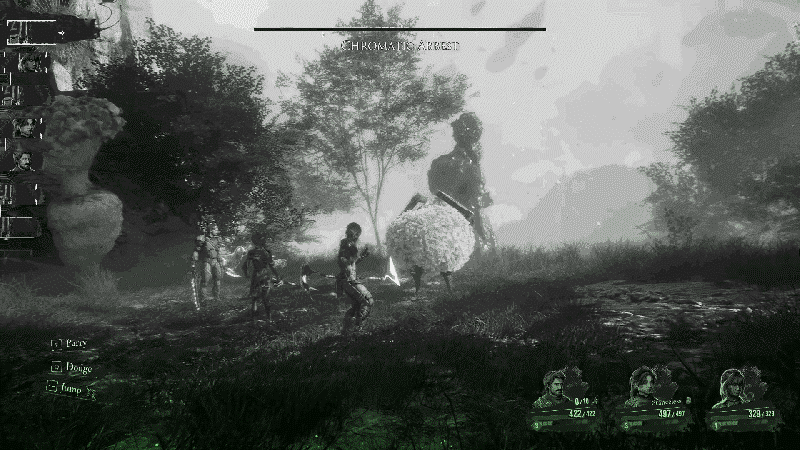
Expedition 33 did not just look different with its ‘Belle Époque’ inspired art style, they’ve also iterated on the iconic turn-based gameplay, infusing it with a more reactionary approach. In the traditional turn-based gameplay, the player would have had to wait for each characters turn to take an action, and when an enemy attacks it was guaranteed to hurt the player; the new approach is when an enemy attacks the player, they had the option block the damage through perfect timing, or dodging it all together. It seems farcical but it adds a lot of depth to the experience.

The Grassroots Effect
While the wider gaming industry is currently rife with controversies like toxic work cultures, crunching, and unionizations; whilst chasing engagement metrics and microtransactions, Broche was blunt about his goals and wanted a “one and done” prestige experience focused on art and storytelling. This contrasts with the wider gaming market, where paid, additional content is part of the production pipeline.
Sandfall Interactive built a positive relationship with the gaming community and has been rewarded for its success. As Broche put it, he and his cohorts vibed their way to success, accidentally shaking up the games industry:
"We make video games to give people a sense of joy and wonder and excitement and the fact that it worked so well for us is the most beautiful reward.”
Guillaume Broche, Sandfall Interactive, CEO
Brand Takeouts
1. Creative Freedom is A Path To Success
Sandfall’s $10 million budget forced them to be efficient with their time and focus; they did what they felt was right, and were rewarded with a successful project and dedicated fans.
2. Hire for Hunger, Not Resume
A Reddit hire. An unknown composer. The junior heavy team. In the creative industry, rawness often outperforms polished sameness and trends. Marketers should look beyond traditional agency rosters and into communities where passion is thriving.
3. Build from Passion, Not Just Metrics
Sandfall didn’t create ‘Expedition 33’ around monetisation opportunities. They built the kind of game they wanted to play at a time when profits direct creative development. Audiences can feel when something is designed to extract value versus when it is designed to deliver a great product.