

The Youth Lab
Fashion’s Hunger Games
The 2026 Met Gala arrived dripping in tailoring, spectacle and discourse. Beneath the sequins and Swarovski, the internet was busy debating billionaire excess, meme culture and whether fashion’s biggest night still understands the cultural moment it exists in. As always, the red carpet doubled as a real time social experiment.
In this week’s 52INSIGHTS we share the download on the top 5 cultural takeaways that defined this year's event.
1. Billionaire Backlash
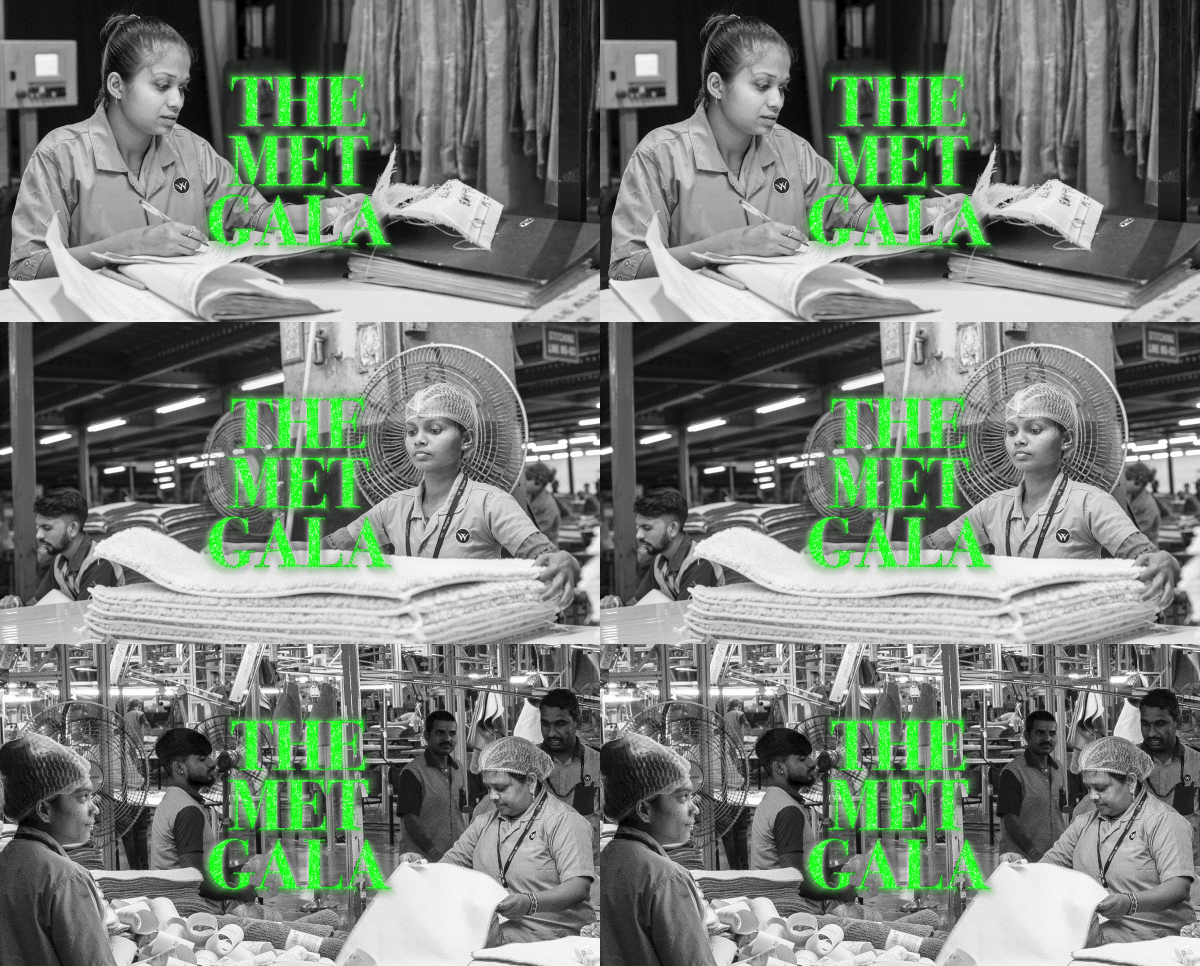
The 2026 Met Gala showed just how thin the line between aspiration and backlash has become online. While the red carpet delivered its usual spectacle, much of the conversation focused on wealth, exclusivity and who the event really serves. Jeff Bezos and Lauren Sánchez Bezos (both co-chairs) became central to that discourse, with Business Insider reporting that almost 70% of social posts mentioning the couple were negative. Ahead of the event, guerrilla protestors projected interviews with Amazon workers onto the Empire State Building, the Chrysler Building and Jeff Bezos’ New York penthouse. One video featured a 72 year old Amazon employee arguing that Bezos’ fortune exists because of workers across Amazon facilities. The stunt became one of the clearest symbols of the anti-billionaire sentiment surrounding this year’s event.
2. High Street Haute
The line between luxury fashion and the high street felt blurrier than ever this year. While couture still dominated the steps, mainstream brands quietly entered the conversation in a major way. Bad Bunny’s custom Zara look became one of the night’s biggest talking points, proving cultural relevance now matters as much as heritage. Gap Studio also made appearances in the wider fashion conversation dressing Kendal for the after party, signalling how accessible brands are increasingly shaping luxury spaces once reserved for legacy fashion houses alone.
3. Accessibility became part of the fashion conversation
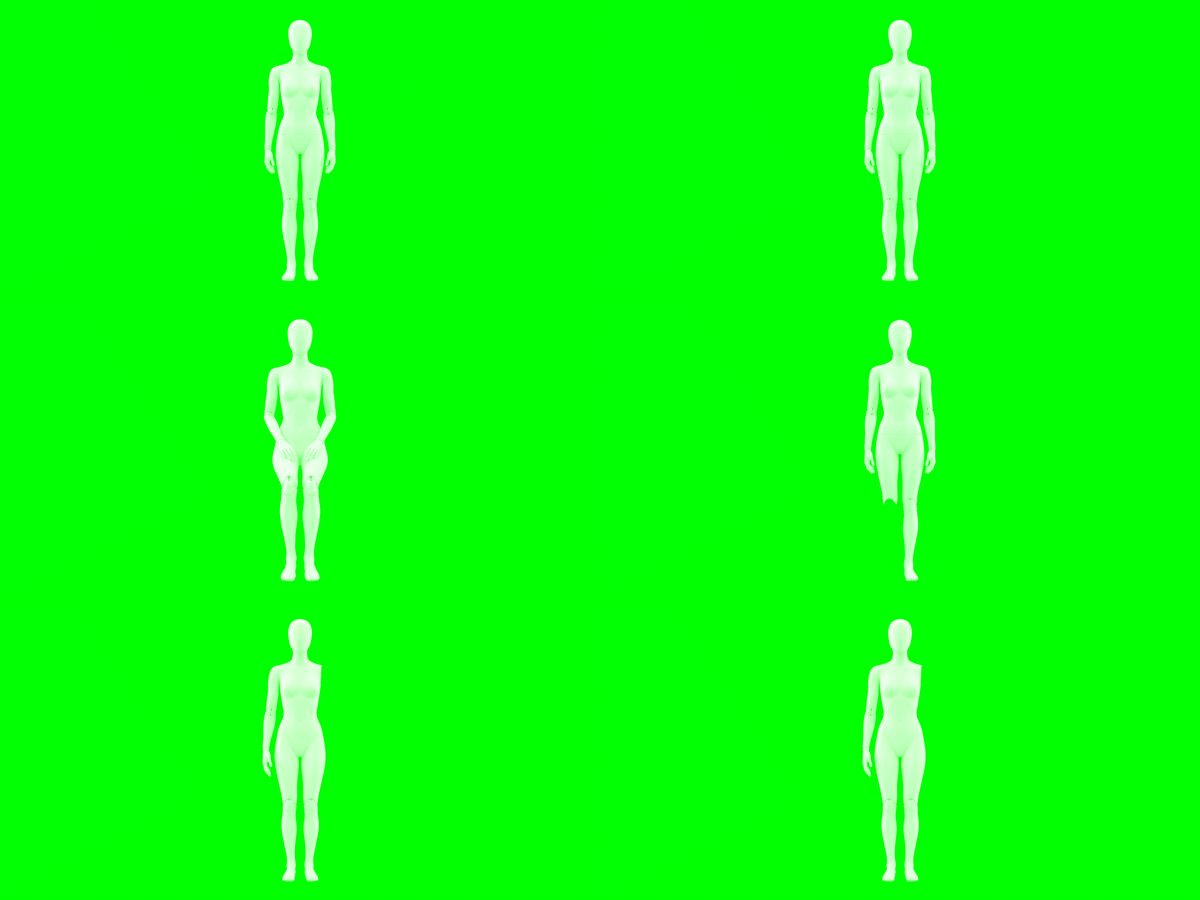
One of the most meaningful cultural conversations of this year’s Met Gala came through Sinéad Burke’s involvement in shaping the “Costume Art” exhibition. Working alongside the Met, Burke helped bring different abled bodies and accessibility into the centre of the conversation rather than treating them as an afterthought. The exhibition included mannequins modelled on differently abled people for the first time, challenging fashion’s long standing obsession with a single body ideal.
4. The Meme Gala
The online youth voice was one of the loudest in the lead up to the Met Gala. Vogue Business reports that 70% of TikTok’s 1.2 billion users are Gen Z, helping explain why the Met Gala generated more than 5.3 billion social impressions ahead of the event. The memes were meme-ing with Rolling Stone and Forbes all reporting on their favourites. At this point, the Met Gala has two red carpets: the one outside the museum, and the one unfolding in memes across the internet wasteland.
5. The biggest brands at the Met Gala are not always invited.
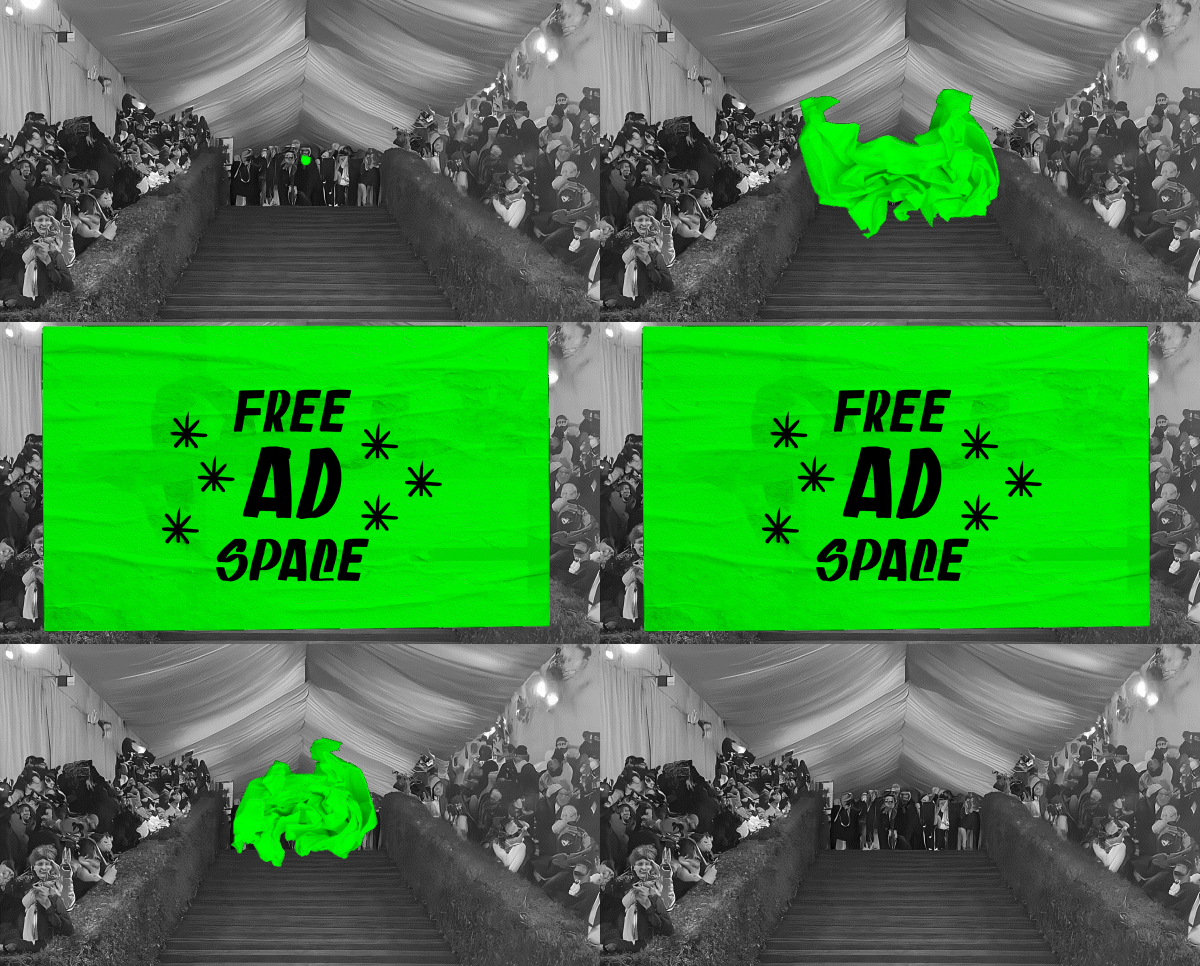
One of the clearest shifts around the 2026 Met Gala was how aggressively non partner brands tried to insert themselves into the conversation. Companies with no connection to the event including Duolingo, IKEA, Wendy’s, Disney and Poppi used reactive posts and memes to tap into the attention economy surrounding the carpet. The Met Gala now functions like the Super Bowl for social teams, where relevance matters more than sponsorship. In 2026, you do not need a ticket to win the Met Gala. You just need a great social team and good timing.
The 2026 Met Gala proved that fashion’s biggest night is still a powerful form of escapism, but increasingly, audiences are questioning the cost of that fantasy.
Young people remain deeply engaged with the spectacle, memes and cultural conversation surrounding the event, yet the tone has noticeably shifted. The glamour now exists alongside conversations about wealth, accessibility and relevance in a world facing economic and social pressure.
James Kavanagh, Creator and Entrepreneur, said:
“Watching the Met Gala and the conversation around it this year felt very different - because of the Bezos in the room. Seeing Lauren & Jeff awkwardly barge their way into a culture they activity harm (Jeff funds the Trump admin that harms women & gays - the bedrock of fashion world), it all felt uncomfortable and a bit… wrong. Did I still watch and judge everyone’s outfits venom wearing my PJs? Yes. I’m probably part of the problem! But the conversations it sparked around fast fashion (Bad Bunny in Zara), corporate greed and billionaires wrecking the place was fascinating and necessary.”
For brands, the Met Gala remains a huge opportunity to tap into culture in real time, but there is growing risk in getting it wrong. In 2026, participation alone is no longer enough. Audiences expect self awareness too.
We’ll see you all here next year on the first Monday in May…