Three things you need to know about how prediction markets actually work.
1. Sold as anti-establishment, yet legitimised by the establishment. Polymarket CEO Shayne Coplan calls his platform “the most accurate thing we have as mankind right now, until someone else creates some sort of super crystal ball.” That belief in prediction markets as a new source of truth is increasingly intersecting with politics: Donald Trump Jr. is both a paid strategic advisor to Kalshi and, since August 2025, an investor and advisory board member at Polymarket through 1789 Capital, while the Trump family’s media company is now preparing to launch its own rival platform, Truth Predict.
2. The “democratisation of finance” pitch collapses under its own data. Kalshi frames trading as a way to “monetise your knowledge, the same way an Uber driver monetises their free time.” Yet, according to The More Perfect Union investigation, only 0.04% of traders capture nearly 70% of the profits on these platforms. Insider trading isn’t a bug, it’s the model. Dr. Robin Hanson, the academic godfather of modern prediction markets says it openly: “If the main purpose is to get more accurate prices, then basically we want as many insiders as we could. Insiders is great. Please, insider trading.” In January 2026, an anonymous Polymarket trader turned $34,000 into $400,000 betting on the timing of Venezuelan President Maduro’s removal, placing a final bet less than an hour before President Trump ordered the operation. As Senator Chris Murphy puts it: “All of the bets on government action are rigged because somebody in government knows the outcome.”
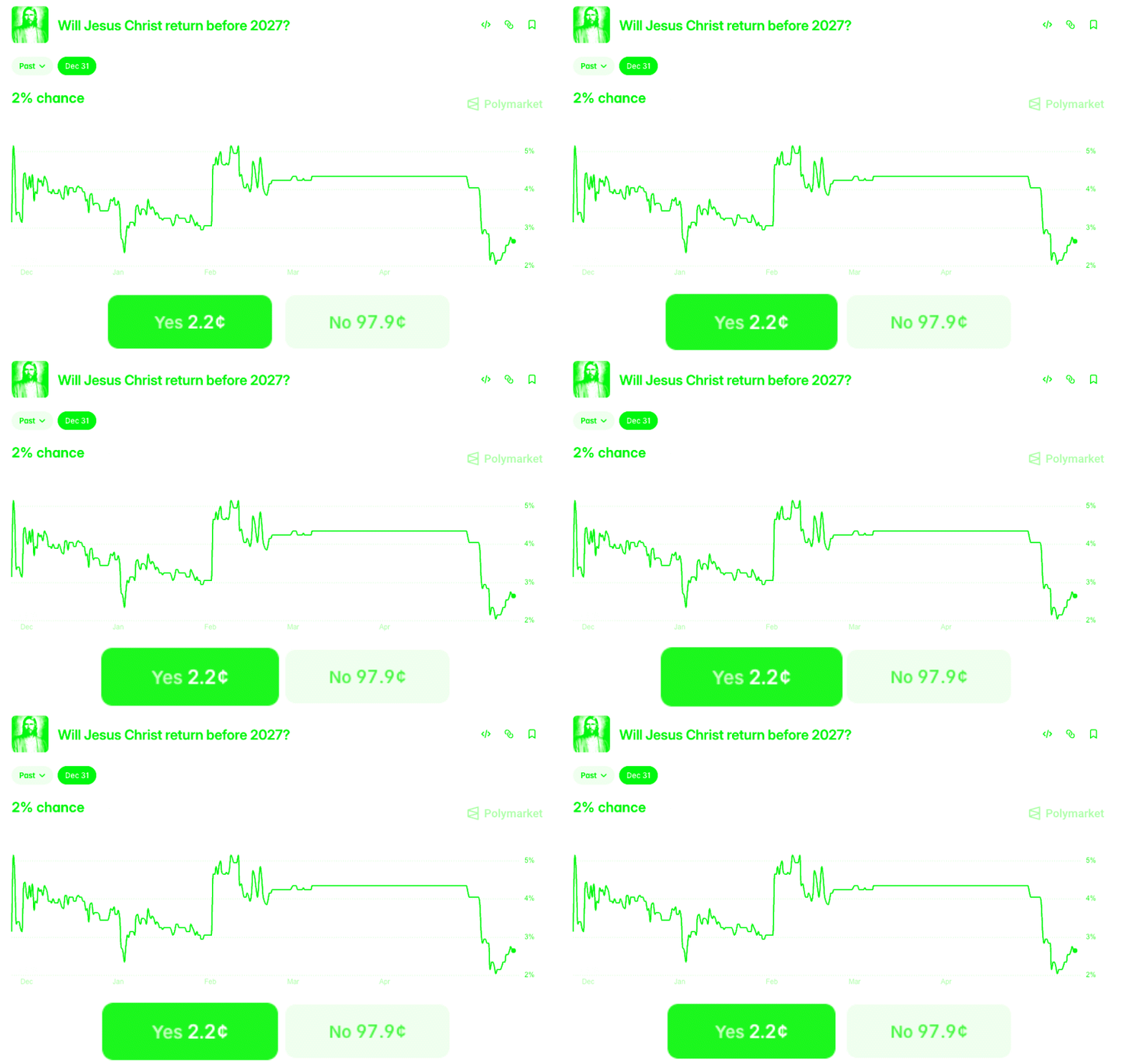
3. Mainstream media working in partnership validates it in culture. Google now integrates Kalshi odds into search results. The Wall Street Journal, CNN and CNBC have all signed partnerships. So a ‘3% chance of Jesus returning before 2027’ sits next to election odds, alongside markets on whether the US will invade a country, each carrying the authority of “what the market thinks.”